
Chapter One
Far away from the riverbank stands a cathedral with shiny round domes. It is white, the details are gold, and the domes and roofs are blue. Down the road from the cathedral, towards the river, sit apartments that look mass-produced—undetailed, grey. If a hypothetical person looks out the window on the top floor of one of the apartments, they would not be able to see the river, for there are factories between the apartments and the river. If said hypothetical person went between the factory and the rivers, however, there are abandoned pipes and maybe some sidewalk. The river is slimy, there are tin cans scattered on the riverbank, and some driftwood from an old boat upstream somewhere.
There is a wooden hut near the riverbank. It is infested with spiders, the foundations are rotting, and there is black mold. People have thrown rocks at it, and it has begun to lean into the river. The spiders normally stay where they are even when people throw rocks at the hut, they don’t leave even when it rains and snows, but everyone hates them. They are big—some are the size of half of an average person’s palm—and they scuttle around in a very uncomfortable way. Everyone—excluding one person who everyone finds quite strange—hopes that they drown when the river rises because they are big and scary.
It is mid-winter, and snow has covered everything evenly. Though it had snowed, a bundled up figure—our dear protagonist Misha—walked across the sidewalk near the hut. There was a spider scuttling across the snow—a rather large one, at that—and Misha watched it instead of simply stepping on it or across it. Misha was a strange person who liked the spiders and was often upset when people threw rocks at the hut where the spiders lived.
After a few minutes of watching, someone in a heavy coat walked past. Misha seemingly did not notice and did not offer a greeting. After the spider successfully crossed the road, he continued walking. After a few minutes, he walked past an old newspaper stand—there were still a few old newspapers still in the stand in front of the building, but they were years out of date. It doesn’t matter—nobody needed the stand anymore anyway, for there isn’t anything to report anymore—the world ended several years ago. Now there is nothing important left to complain about—only the spiders in the hut.
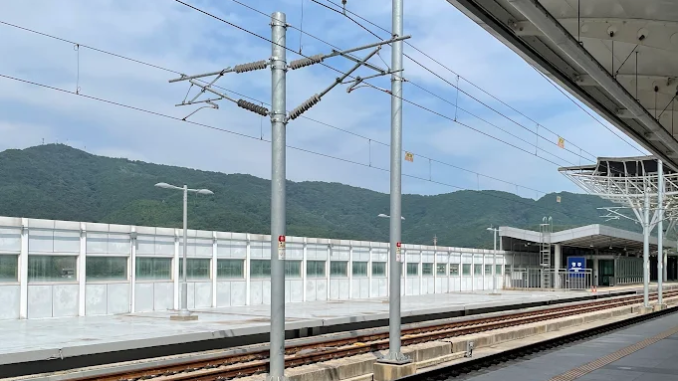
After a while, Misha stumbled across the old train station. A few old trains were sitting in the station, and there was the smell of soup coming from an old passenger car, but none of the old trains were functional. Misha continued walking and followed the rail lines. There was a fallen power line across the tracks at some point perhaps fifteen minutes away from the town, and he stepped over it. He did not want to trip—besides, a long time ago, there was electricity running through it. What if it starts again?
It’s cold today, but Misha promised to go to the next town over where his friend lived. There’s a place to see the ocean and a road that leads into it where you can sometimes find things from the old world washed up. Misha sometimes wondered, if he followed the road into the sea, would the flooded town have some rooms that were still dry? Water can’t break into closed rooms, right? Misha fidgeted with his glove, trying to remember the name of the flooded town again, but he couldn’t remember. He didn’t mind.
Someone had dug the rails out from below the snow to make them easy to follow. Misha did not need to wear his heavy boots today, because of that, and he regretted doing so with every step. However, it would take too long to go back and change his boots, so he continued walking. There were some abandoned train cars on the tracks that Misha had to walk around—he saw someone waving to him from one, and he waved back. He heard that, instead of being strange houses, long ago, the train cars used to move between cities and this trip would take a minute, perhaps two minutes instead of an hour.
Before long, Misha reached the lovely little town next to the ocean. He heard a group of people laughing from a hut when he got there—perhaps they were talking about old memories. The little hut they were laughing in—long ago it was for selling newspapers—looked like a less dilapidated version of the house where the spiders lived, but it had been painted white and there were no spiders. He continued walking through the valley of buildings until he saw the place he had agreed to meet up with his friend.
There were a few street signs sticking out next to the ocean, and, in the distance, a few roofs of apartment buildings not unlike those in the other town—rather sad gray blocks with broken windows sticking out of the water. Misha sat on the snow near the ocean and looked out. He was waiting for his best friend Katya before exploring the rest of the town—she promised to buy some supplies with him and show him around. He wasn’t the most familiar with this town—he only started visiting last year when Katya came to visit.
Misha’s best friend Katya was an interesting person. She was from a faraway place, but she never told anyone where she was from and always deflects questions about her past. Misha never minded—a person who is a good friend is a good friend. Katya is someone who was kind and loving to others, and she was a good person. Katya always looked happy when you said her name, and she was always happy when she sewed a new dress or made a new hairpin or other lovely accessory. Misha was very curious as to why she never told anyone, but he is too polite to ask her why. It doesn’t matter what her past is like—her kindness now is important.
After a while, Katya came and patted Misha on his shoulder. As always, she’s pretty again today—she’s wearing a heavy fur coat, but she’s embroidered the sleeve cuffs with flowers and trees in lovely colors. Nobody else has a coat like that—she said that she took it from the town she was originally from, and other people wanted to know where so they could have a nice fur coat too, but she kept it a secret. Misha often wanted to ask her, since she would tell him anything and he would tell her anything, but a secret is a secret for a reason.
Photo by author